TUA Concludes Two-Year Project with UBCHEA on Values Formation and Sustainable Living
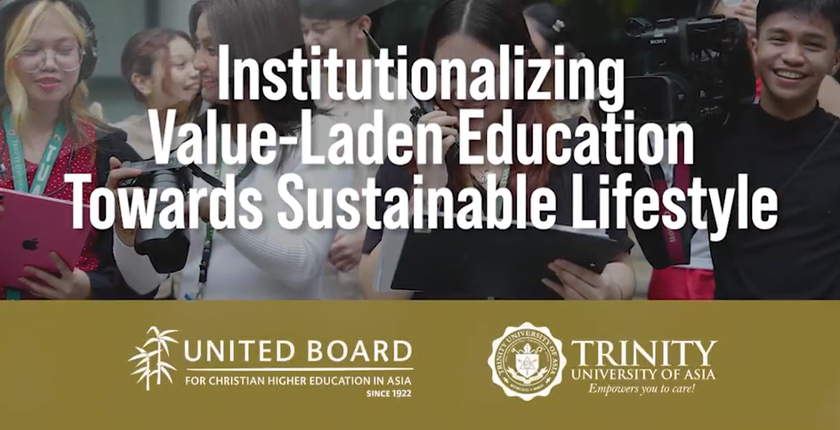
Trinity University of Asia (TUA) held the Culmination and Commitment Ceremony for the Institutionalizing A Value-Laden Education Towards A Sustainable Lifestyle project on June 8, 2026, at the Sinulog Lounge of Mary Alston Hall.
The ceremony gathered University leaders, faculty members, project collaborators, and partners to share the outcomes of a two-year initiative focused on strengthening values formation within teaching, learning, and community engagement.
Supported through a faculty development grant from the United Board for Christian Higher Education in Asia (UBCHEA), the project ran from January 2024 to April 2026. The initiative was undertaken through a shared commitment to meaningful Christian higher education and the formation of students who can contribute responsibly to their communities.
The program featured presentations on the project’s development, key milestones, and research findings, followed by testimonials and reflections from individuals involved in its implementation. An institutional commitment ceremony and recognition of collaborators concluded the event.
The project began with a question: How can values education become more meaningful and relevant to today’s learners?
To address this, the University Research and Development Center (URDC) examined how Generation Z students learn, make decisions, and practice values in their daily lives. The findings informed the development of learning modules, classroom strategies, and formation activities that connected values with lived experiences.
Over the course of the project, these resources underwent pilot testing, classroom implementation, community engagement activities, and evaluation. Faculty members, students, and community participants contributed insights that helped strengthen the framework and its application across different learning environments.
At the center of the initiative is a framework that brings together stewardship, citizenship, responsibility, and spiritual formation. These themes were integrated into learning experiences that encourage students to connect knowledge with personal responsibility and community participation.
Stories shared during the ceremony highlighted how students engaged with values beyond academic requirements. Community participants also played an important role in shaping learning experiences that are grounded in local realities and everyday concerns.
A project video presented during the event documented the journey from research to implementation. Faculty members, students, and partners shared how the initiative informed teaching practices, supported student formation, and created opportunities for meaningful engagement within and beyond the classroom.
As the project concludes, its outputs will continue to support curriculum initiatives, faculty development, and learning experiences across the University. The work undertaken over the past two years provides a foundation for ongoing efforts to integrate values, stewardship, and responsible citizenship into teaching, learning, and community engagement.


 The Trinitian Center for Community Development is the official arm for Community Extension Service that supports Trinity University of Asia in carrying out its Vision and Mission of involving her constituents to live a LIFE that is GOD-centered and in service to the community.